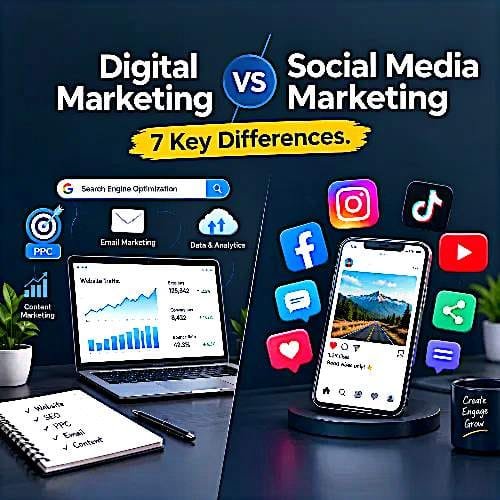
Understanding the fundamental difference between digital marketing and social media marketing is essential for building a successful online presence. While digital marketing encompasses all online promotion techniques, social media marketing is a specialized subset focusing on social platforms. Confusing these terms leads to incomplete campaigns and misallocated budgets. In this guide, you will learn how these strategies differ in scope, channels, objectives, and costs to make informed marketing decisions. Working with digital marketing experts in Pakistan helps businesses select and implement the right strategy.
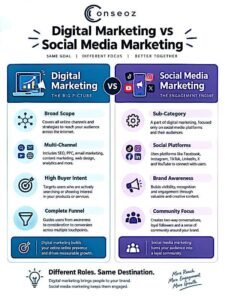
Digital Marketing vs Social Media Marketing: Comparison Table
The table below provides a quick side-by-side comparison of the core distinctions:
| Comparison Factor | Digital Marketing | Social Media Marketing |
|---|---|---|
| Overall Scope | All digital channels (online and offline digital mediums) | Specific social media platforms |
| Primary Goal | Complete brand visibility, lead capture, and sales conversion | Community engagement, brand awareness, and customer interaction |
| Core Channels | Websites, Search Engines, Email, SMS, Apps, Social Media | Facebook, Instagram, TikTok, LinkedIn, X, YouTube |
| Audience Reach | Passive and active buyers across search and inbox channels | Active social feeds and specific interest communities |
| Content Formats | Blog posts, eBooks, search ads, email series, videos | Short-form Reels, carousels, stories, posts, and live streams |
| Measurement Metrics | Organic traffic, conversion rates, customer lifetime value | Engagement rate, shares, comments, video watch time, followers |
| Implementation | Multi-channel integration requiring diverse specialized skills | Focused platform strategy centered on content and community |
What Is Digital Marketing?
Digital marketing is an umbrella term encompassing every marketing initiative that uses electronic devices or the internet. It includes search engine optimization (SEO), pay-per-click (PPC) search advertising, email marketing, content marketing, website design, mobile apps, and affiliate networks.
By deploying a broad array of digital touchpoints, digital marketing targets consumers at every stage of the buyer journey, from problem recognition to final purchase. Utilizing specialized SEO content marketing services ensures your brand ranks prominently on search engines to capture active search demand.
What Is Social Media Marketing?
Social media marketing is a specific component of digital marketing focused on creating and sharing content across social media networks. It utilizes platforms like Facebook, Instagram, TikTok, LinkedIn, and X to build brand recognition, foster community engagement, and drive direct website traffic.
Social channels rely on user interaction, algorithm-driven feeds, and visual storytelling. Through targeted campaign management and creative post design, social media marketing turns casual viewers into brand advocates. Partnering with professional social media marketing services in Pakistan helps businesses establish an active, engaging social presence.
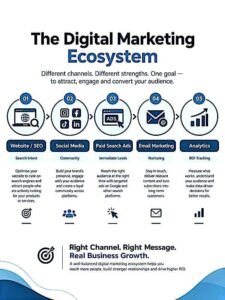
7 Key Differences Between Digital Marketing and Social Media Marketing
1. Scope and Inclusivity
Digital marketing is the complete ecosystem containing all online marketing activities. Social media marketing is one component within that broader umbrella. All social media marketing is digital marketing, but not all digital marketing involves social media.
2. Marketing Channels
Digital marketing spans websites, search engines, email inboxes, mobile applications, display banners, and SMS messages. Social media marketing operates strictly within social networking feeds and community platforms.
3. Campaign Objectives
Digital marketing focuses on driving conversions, capturing search intent, closing sales, and improving overall customer acquisition efficiency. Social media marketing focuses on building brand personality, encouraging audience dialogue, increasing post reach, and nurturing customer relationships.
4. Audience Intent
Digital search channels capture high-intent users who are actively searching for solutions to specific problems. Social platforms target passive users who are browsing entertainment feeds, requiring compelling visuals and hooks to interrupt their scrolling habit.
5. Content Formats and Creation
Digital marketing utilizes long-form articles, technical whitepapers, structured landing pages, and email newsletters. Social media marketing relies heavily on short-form video, eye-catching graphics, carousels, and user-generated content.
6. Performance Metrics
Digital marketing tracks overall website traffic, conversion rates, cost per acquisition (CPA), customer lifetime value (LTV), and revenue ROI. Social media marketing measures likes, shares, comments, post impressions, and follower growth rate.
7. Cost Structure and Investment
Digital marketing requires ongoing investments in website development, search engine optimization, paid ad budgets, and marketing software. Social media marketing can start with organic posting, though scaling reach requires paid ad spend managed by a specialized Facebook Ads agency.
Digital Marketing Channels vs Social Media Channels
A comprehensive strategy combines diverse channels to maximize audience touchpoints.
Core Digital Marketing Channels:
- Search Engine Optimization (SEO): Organic visibility on Google search results.
- Paid Search Advertising: Capturing immediate search intent using targeted keywords with Google Ads management.
- Email Marketing: Direct communication for lead nurturing and transactional updates.
- Website & Content Marketing: Publishing authoritative resources backed by a clear content marketing strategy.
Core Social Media Channels:
- Facebook & Instagram: Broad visual reach, e-commerce integration, and targeted community ads via paid social media campaigns.
- TikTok: Viral short-form video discovery for younger consumer demographics.
- LinkedIn: B2B networking, corporate thought leadership, and professional recruitment.
Benefits and Limitations of Each Approach
Digital Marketing Benefits:
- Covers the entire customer purchase journey from discovery to retention.
- Captures active buyers searching for immediate solutions.
- Delivers highly measurable sales attribution and multi-channel ROI.
Digital Marketing Limitations:
- Higher technical complexity and setup requirements.
- Requires longer lead times for SEO and content authority building.
Social Media Marketing Benefits:
- Creates direct, two-way communication with target audiences.
- Offers rapid brand awareness and viral potential through creative content.
- Builds customer trust through active community management.
Social Media Marketing Limitations:
- Organic reach can be constrained by social platform algorithm changes.
- Generally lower direct purchase intent compared to search engine queries.
Which Strategy Is Best for Your Business?
Choosing between these strategies depends on your immediate business goals, budget, and industry dynamics.
- Choose Social Media Marketing If: You need quick visual brand awareness, want to interact directly with consumer communities, or run a visual B2C product line.
- Choose Broad Digital Marketing If: You require scalable lead generation, target high-intent search buyers, sell B2B services, or need a sustainable sales funnel.
For most businesses, focusing exclusively on social media leaves significant search revenue on the table.
Can Digital Marketing and Social Media Marketing Work Together?
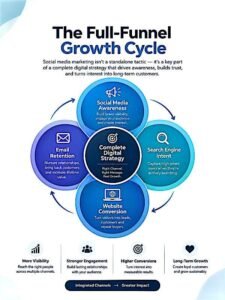
Yes, digital marketing and social media marketing yield the strongest results when integrated seamlessly into a unified strategy. Social media activities build visual awareness and drive top-of-funnel traffic, while broad digital strategies convert that traffic into revenue.
For example, a user discovers your product through an Instagram Reel, visits your website, and leaves without purchasing. Dynamic retargeting ads on social channels keep your brand top of mind, while search optimization and paid search advertising ensure your website appears when that user searches for your product on Google.
How Conseoz Supports Business Growth
Executing an integrated online strategy requires technical expertise, creative skill, and strategic oversight. The experienced Conseoz digital marketing team provides complete digital solutions designed to accelerate growth for regional and global businesses.
As a premier digital marketing agency in Pakistan, Conseoz aligns social media management, content creation, paid advertising, and search engine strategy to deliver measurable commercial results. Learn more about Conseoz and how custom digital marketing services can elevate your brand.
Key Takeaways
- Social media marketing is a specialized subset within the broader digital marketing landscape.
- Digital marketing covers all online touchpoints, including websites, search engines, email, and social networks.
- Search engines capture active demand, whereas social media platforms generate brand awareness among passive browsers.
- Social media measures engagement and post reach, while broad digital marketing evaluates overall conversions and customer acquisition costs.
- Integrating social media tactics with technical digital marketing produces the highest long-term ROI.
Frequently Asked Questions (FAQs)
1. What is the main difference between digital marketing and social media marketing?
Digital marketing covers all promotional activities using digital devices and the internet, while social media marketing is a specific subset focused exclusively on social networks like Facebook, Instagram, and LinkedIn.
2. Is social media marketing cheaper than overall digital marketing?
Starting with organic social media posting is free, but scaling reach requires ad budgets. Broad digital marketing requires investments in website development, SEO, and paid search ads alongside social media spend.
3. Can a business succeed using only social media marketing?
While social media builds brand awareness, relying on it exclusively leaves out high-intent search engine traffic, email subscriber lists, and owned web assets that protect against social algorithm changes.
4. Which approach delivers a faster ROI?
Paid social media ads and paid search advertising deliver rapid traffic and inquiries. However, building long-term sustainable ROI requires combining quick-turnaround ads with search engine optimization and content strategy.
5. Does social media marketing help with Search Engine Optimization (SEO)?
Social media activity does not directly increase Google search rankings, but social shares increase content visibility, drive referral traffic, and encourage natural backlink creation.
6. Which platform is best for B2B digital marketing?
LinkedIn is the primary social platform for B2B marketing, while Google search advertising and SEO content marketing capture professionals actively searching for business solutions.
7. How do I know if my business needs an agency?
If your team lacks the time, software tools, or specialized skills to manage search optimization, paid media buying, content production, and analytics across multiple channels, partnering with an agency ensures consistent growth.